 Free Shipping Over $50
  888-432-8363


 Obituary/Programs
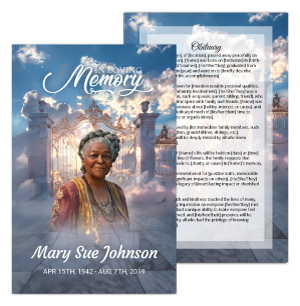 No-Fold Memorial Programs
 4 Page Funeral Programs
 8 Page Memorial Programs
 12 Page Funeral Programs
 16 Page Funeral Programs
 20 Page Funeral Programs
 Tri-Fold Funeral Programs
 Complete Memorial Packages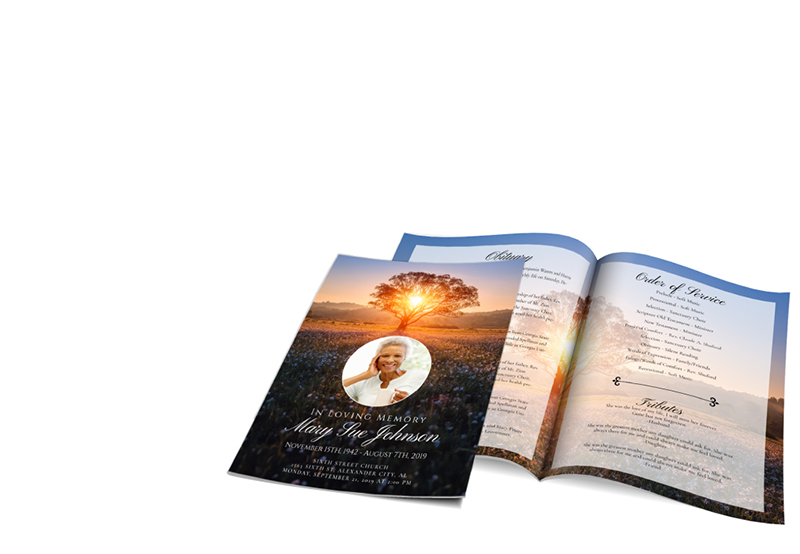
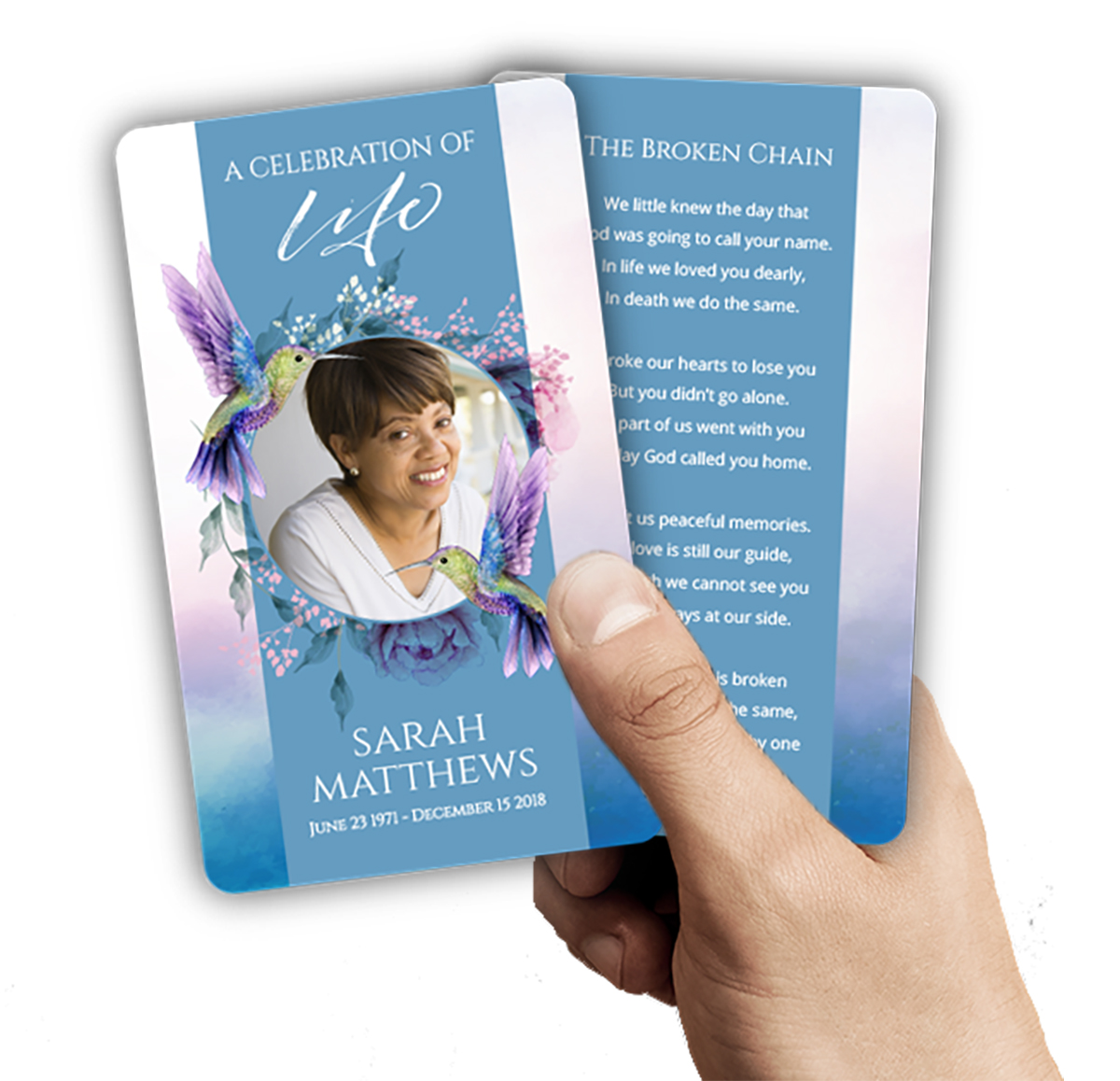 Cards & Bookmarks
 Saint Prayer Cards
 Folded Memorial Cards
 Folded Holy Cards
 Memorial Bookmarks
 Thank You Cards
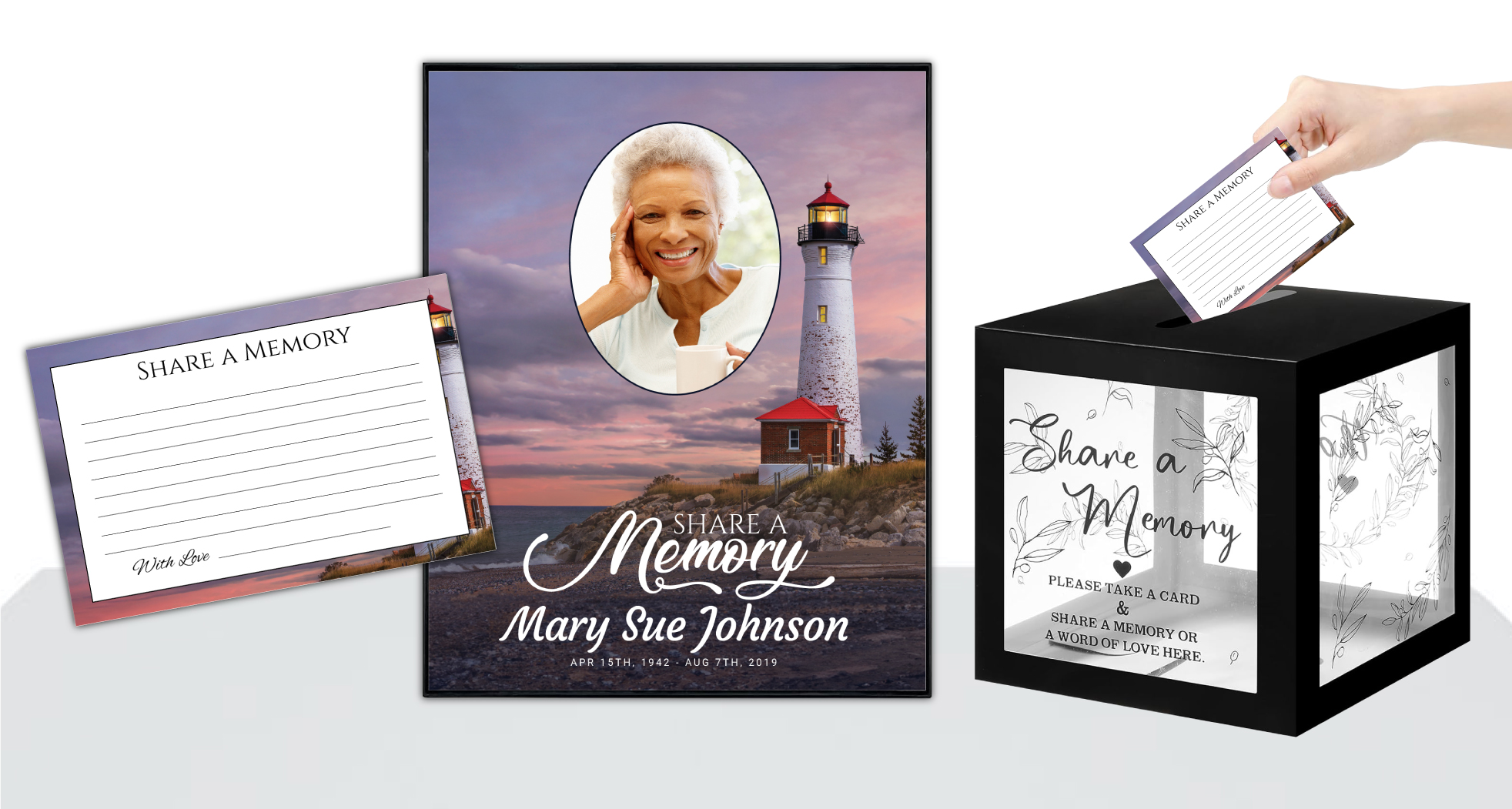 Share-A-Memory Cards
 Memorial Magnets
 Memorial Posters
 Guest Books
 Slide Shows
 Memorial Fans
 Death Announcements
 Take Away Keepsakes
 Church Products
Gentle Beginnings: Understanding the Importance of Dividing Funeral Planning Tasks
When a loved one passes away, the world can suddenly feel unfamiliar and overwhelming. Emotions run deep, and the process of making arrangements can seem daunting. During these difficult times, a clear, compassionate approach to delegation can make a world of difference. That’s why exploring the “funeral planning checklist who does what” is so important—both for easing the practical burdens and supporting each other through grief.
Funeral planning involves a series of decisions and arrangements, each carrying its own significance. Families often find comfort in coming together, yet it’s common for uncertainty to arise about who should handle which responsibilities. Carefully and fairly dividing tasks allows everyone to participate in a way that honors their strengths and emotional readiness, while also ensuring nothing meaningful is overlooked.
This article is here to guide you step by step. We’ll walk through a comprehensive funeral planning checklist, focusing on who might be best suited to take on each responsibility. You’ll find practical tips, real-world scenarios, and gentle advice for everything from arranging the service to choosing memorial keepsakes like bookmarks or prayer cards. We’ll also share how DisciplePress products and services—such as bi-fold programs, 8-page programs, and custom design services—fit into the process, supporting you at every stage.
Our hope is to provide comfort and clarity as you navigate this journey. By understanding each task and thoughtfully considering who can manage it, families can come together in a spirit of love, remembrance, and mutual support. Let’s begin this checklist with empathy, practical wisdom, and the reassurance that you are not alone.
Task 1: Making Initial Arrangements—Who Should Lead the First Steps?
The first hours and days after a loss are often the most disorienting. Immediate decisions must be made, even as emotions are raw. Typically, the person closest to the deceased—such as a spouse, adult child, or designated next of kin—takes the lead. This role involves notifying authorities, close family, and beginning contact with a funeral director or home. It’s a task requiring both emotional resilience and a calm, practical demeanor.
Every memorial should reflect the unique life and legacy of your loved one. We offer Memorial Bookmarks, Funeral Programs and Prayer Cards to help you create meaningful tributes.
For families with multiple siblings or relatives nearby, consider designating one person as the primary point of contact. This can reduce confusion and ensure communication is clear. Others can assist by managing phone calls, updating extended family, or supporting logistical needs such as transportation or meals. For those separated by distance, digital tools like group chats or shared checklists can help everyone stay informed and involved.
During this stage, assigning a family member or close friend with organizational skills can be especially helpful. This person might also research options for funeral programs—such as bi-fold programs or celebration of life programs—to be discussed later in the process. Early consideration of timelines, especially if you anticipate needing same-day printing or rush orders, can help prevent last-minute stress.
Another important aspect is gathering essential documents. Whoever handles this should be comfortable with paperwork and detail-oriented. They’ll need to locate the will, insurance policies, and any prearranged funeral plans. Having a dedicated document keeper ensures nothing is missed during this transitional time.
Remember: No one has to bear these initial responsibilities alone. Encourage open communication, and don’t hesitate to reach out to professionals or services like DisciplePress for support. The beginning steps are never easy, but sharing the burden makes them more manageable.
Task 2: Coordinating with the Funeral Home and Service Providers
Once the initial arrangements are underway, someone must take the lead in coordinating with the funeral home and related service providers. This task often falls to the next of kin or the person named as executor, but it’s reasonable—and sometimes necessary—to involve others. Whoever steps into this role should feel comfortable with logistics, paperwork, and communication.
This person will work closely with the funeral home to select the type of service, schedule the date and time, and discuss options like cremation or burial. They may also coordinate with clergy members, celebrants, or those leading the ceremony. For families with a strong faith tradition, it may be fitting for a spiritual leader or designated family member to handle religious arrangements, including choices of Bible readings or hymns.
Practical tips include creating a shared digital document where details and contacts can be tracked. Another family member might be assigned to research and order memorial items such as prayer cards, memorial bookmarks, or obituary templates. DisciplePress offers a wide range of options—such as memorial cards, folded memorial cards, and custom design services—that can help personalize the service and honor the loved one’s memory.
It’s also wise to designate someone to track expenses and payments. This could be the same person handling the main coordination, or a financially savvy relative. They can keep receipts, manage deposits, and ensure the process runs smoothly without unexpected costs. Clear communication about financial responsibilities can prevent misunderstandings during an already stressful time.
Involving multiple family members in these arrangements not only lightens the load but also allows for diverse perspectives and thoughtful decisions. Encourage everyone to share their wishes and concerns, fostering a spirit of unity and respect.
Task 3: Writing the Obituary and Selecting Program Content
Crafting an obituary and preparing content for the funeral program are deeply personal tasks. They offer a chance to reflect on the loved one’s life, values, and legacy. Typically, a family member with a talent for writing or storytelling steps into this role, often with input from siblings, children, or close friends who can provide anecdotes and memories.
We’re committed to supporting you through this difficult time with meaningful memorial resources. We offer Prayer Cards, Memorial Cards and Obituary Templates to help you create meaningful tributes.
When selecting someone to write the obituary, consider who knew the deceased best and feels emotionally ready to take on the task. If writing feels overwhelming, families can use resources such as the DisciplePress Obituary Writing Assistant to guide the process. It’s also helpful to have another person review the draft for accuracy and completeness, ensuring that important details and names are correct.
Choosing content for the funeral program—including photos, poems, Bible verses, or memorial quotes—can be a collaborative effort. Some families create a shared folder for images and favorite memories. Others assign this task to a creative family member or friend who enjoys design and layout. If time is short, DisciplePress offers same-day printing and rush orders for funeral programs like bi-fold, tri-fold, 8-page, and booklet formats, making it easier to finalize and print materials efficiently.
It’s important to be mindful of cultural and religious traditions when selecting program content. For example, including a favorite psalm, prayer, or a piece from the Funeral Poems Collection can bring comfort to attendees. If you’re unsure about what to include, you can consult with your funeral director or reach out to DisciplePress for guidance on meaningful program elements.
Ultimately, the goal is to honor the loved one’s story in a way that feels authentic and respectful. Assigning these tasks to those with a gentle touch and an eye for detail ensures the program and obituary become cherished keepsakes for all who attend.
Task 4: Creating and Distributing Memorial Keepsakes
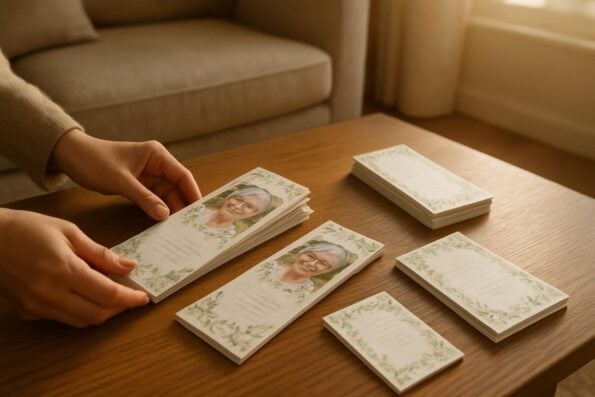
Memorial keepsakes provide tangible comfort and lasting reminders of a loved one’s life. Items like memorial bookmarks, prayer cards, and memorial cards are treasured by family and friends long after the service. Assigning the creation and distribution of these keepsakes is an important part of the funeral planning checklist—who does what can depend on skills, interests, and availability within the family.
A family member with graphic design experience may wish to personalize bookmarks or prayer cards, selecting colors, photos, and meaningful quotes. If no one feels equipped for this, DisciplePress offers custom design services to help create beautiful, customized memorial items, from folded memorial cards to large memorial cards and obituary templates. Consider discussing the range of available options, such as nature-themed or faith-based programs, to find the right fit for your loved one’s memory.
Distribution can be handled by someone who is organized and comfortable with logistics. This may involve mailing keepsakes to distant relatives, coordinating with the funeral home for in-person distribution, or preparing thank you cards for those who supported the family. Using a checklist can help track who has received which items, ensuring no one is overlooked during this busy time.
Involving children or grandchildren in assembling or decorating keepsakes can be a healing activity, allowing them to contribute in a meaningful way. For example, young family members could add personal drawings to memorial bookmarks or tie ribbons around prayer cards. These small touches add warmth and create lasting memories for everyone involved.
Remember that memorial keepsakes aren’t limited to paper items. DisciplePress also offers options like memorial candles and memorial garden flags. Assigning a family member to explore and select these items ensures the service is as unique as the person being remembered.
Task 5: Managing the Service: Ceremony, Music, and Readings
The heart of any funeral or memorial service lies in its ceremony, music, and readings. Assigning responsibilities here can be both an honor and a comfort to those involved. Typically, one or two family members coordinate the sequence of events, working closely with clergy, celebrants, or a funeral director to ensure everything flows smoothly.
Music selection is often entrusted to a family member with a deep connection to the deceased’s tastes or spiritual background. This person can gather favorite hymns, songs, or instrumental pieces, as well as coordinate with musicians or arrangers. If there are special requests—such as a grandchild playing an instrument or a friend singing a meaningful song—ensure this is communicated early so rehearsals can be arranged.
Readings, including Bible verses, poems, or personal reflections, can be assigned to those comfortable speaking in public. Some families invite multiple speakers to share memories or offer prayers. If you wish to include selections from the DisciplePress Bible Verses Collection or Funeral Poems Collection, designate someone to review and choose passages that resonate most deeply.
For the order of service, a detail-oriented relative can finalize the sequence and provide information for the funeral program. This ensures that everyone knows their role and timing. DisciplePress offers various program formats—such as 12-page, 16-page, or even 20-page programs—that can accommodate more extensive ceremonies, multiple readings, and additional photographs or tributes.
Assigning these ceremonial tasks not only involves more family members but also allows each person to contribute in a way that feels meaningful to them. The collective effort weaves together a rich tapestry of love and remembrance, honoring every facet of the person who has passed.
Task 6: Handling Guest Logistics and Communication
Coordinating guests is a crucial aspect of planning a meaningful funeral or memorial service. Assigning someone as the main point of contact for guest communication helps ensure everyone is informed and supported. This person can handle invitations, RSVPs, and provide directions or accommodation information for out-of-town attendees.
Printed materials like death announcement cards, church invite cards, or funeral guest books can be ordered in advance and customized through DisciplePress. Consider designating a family member to manage these details, especially if you anticipate a large gathering or want to ensure that everyone receives accurate information. For last-minute changes, someone with access to group messaging or email lists can quickly update guests as needed.
Another important responsibility is organizing transportation and hospitality. This might involve arranging car pools, coordinating with a local church for refreshments, or setting up a reception area. A detail-oriented individual can create a checklist for seating arrangements, parking, and accessibility needs, making guests feel welcome and cared for.
During the service itself, greeters or ushers—often friends or extended family—can assist with seating, distribute programs, or collect share a memory cards. Assigning these roles in advance prevents confusion and ensures the event unfolds smoothly. For larger gatherings, consider assigning a team leader to coordinate efforts and troubleshoot any unexpected issues.
Finally, sending thank you cards after the service is a thoughtful gesture. Assigning this task to a family member who enjoys writing or organizing correspondence ensures every act of kindness is acknowledged, further strengthening bonds of support during this difficult period.
Task 7: Personalizing the Service with Keepsakes and Displays
Personal touches can transform a funeral or memorial service, making it a true reflection of the life being celebrated. Assigning someone to oversee keepsakes and visual displays is a heartfelt way to bring together cherished memories and stories. This role is well-suited to a creative or artistic family member who enjoys curating photos, mementos, and decorations.
Photo displays, memory tables, and memorial posters can be created using images from different life stages. DisciplePress offers high-quality printing for memorial posters and can help with custom layouts if needed. Assigning a team to gather and digitize photos ensures you have a rich selection for both printed and digital displays, such as a memorial slideshow.
For those wishing to create lasting tributes, consider involving family members in assembling keepsakes like memorial ornaments, memorial yard signs, or ashes holder necklaces. These items can be distributed during the service or mailed to loved ones who couldn’t attend. Involving children in creating small crafts or memory jars can also provide comfort and a sense of participation.
Another important element is the guest book, where attendees can share messages and memories. Assign a family member to set up and monitor this station, perhaps encouraging guests to fill out share a memory cards or leave a favorite story. Afterwards, this collection becomes a treasured keepsake for the family.
Personalizing the service with meaningful displays and keepsakes invites everyone to participate in honoring your loved one. It’s a way to celebrate their unique journey, while also providing comfort and connection for those left behind.
Related Articles
Conclusion: Moving Forward Together with Compassion and Support
Funeral planning is an act of love, care, and remembrance. By thoughtfully dividing tasks using the “funeral planning checklist who does what” approach, families can ensure that each responsibility is managed with attention, respect, and heart. Assigning roles based on strengths and comfort levels helps lighten the emotional load, allowing everyone to participate in their own meaningful way.
We have explored how clear delegation—from initial arrangements to program creation, keepsake distribution, guest logistics, and personalizing the ceremony—brings order and comfort to a challenging time. Utilizing resources like DisciplePress for funeral programs, memorial bookmarks, prayer cards, and custom design services can ease many of the practical burdens and help create lasting tributes that honor your loved one.
It’s natural to feel overwhelmed or unsure during such a tender chapter. Remember, you are not alone. Reach out to funeral directors, trusted friends, or our compassionate team at DisciplePress for guidance and support. Whether you need help with obituary writing, choosing the right program format, or need a rush order on memorial cards, we are here to help every step of the way.
As you move forward, focus on kindness—to yourself and to each other. Open communication, shared responsibilities, and gentle understanding will carry you through. If you have questions or need further assistance, please contact us or explore our full range of memorial printing options and resources.
In times of loss, the strength of family and community shines brightest. May your planning bring comfort, connection, and the peace of knowing you have honored your loved one’s life with grace and care. Learn more about DisciplePress and our commitment to serving families. Browse our design gallery for inspiration. For personalized assistance, please contact us.