 Free Shipping Over $50
  888-432-8363


 Obituary/Programs
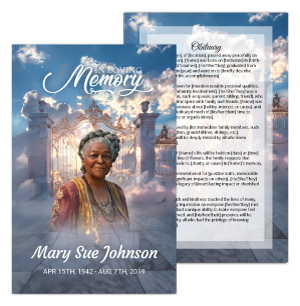 No-Fold Memorial Programs
 4 Page Funeral Programs
 8 Page Memorial Programs
 12 Page Funeral Programs
 16 Page Funeral Programs
 20 Page Funeral Programs
 Tri-Fold Funeral Programs
 Complete Memorial Packages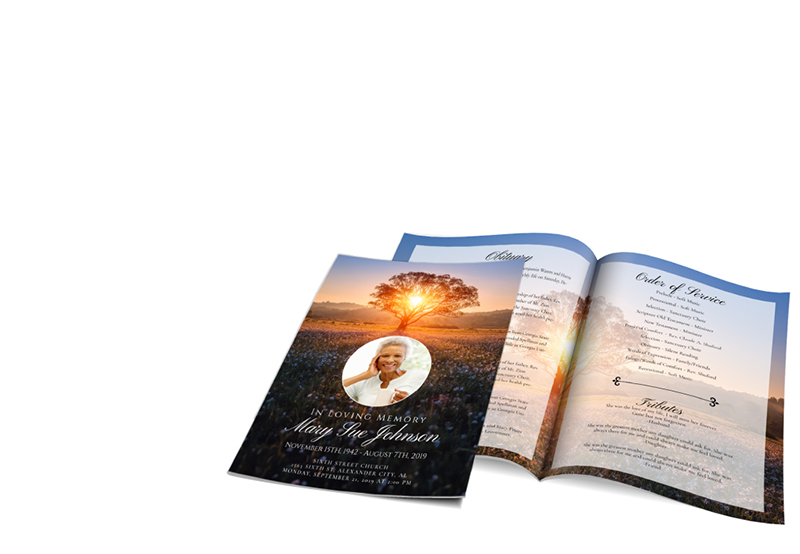
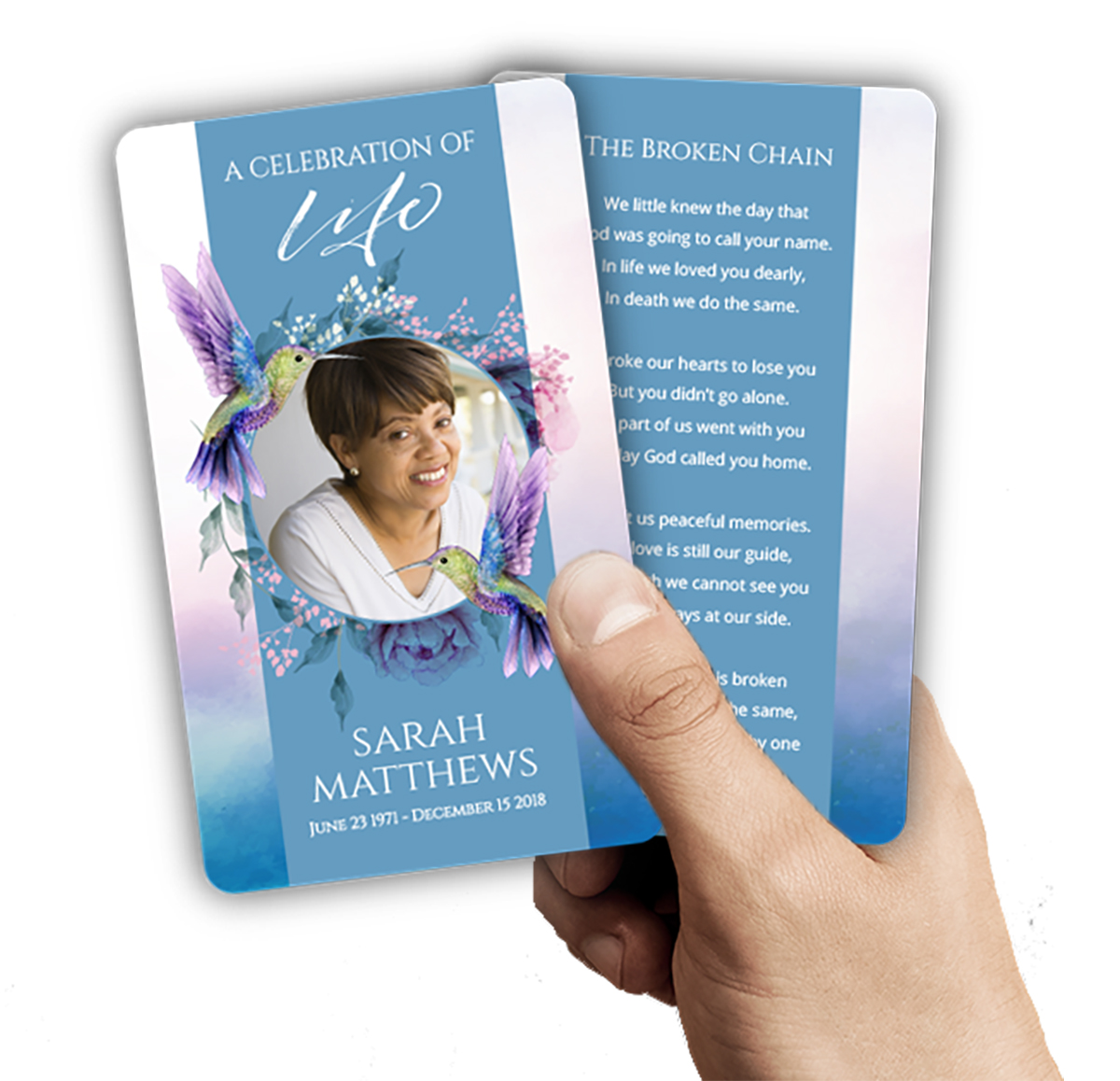 Cards & Bookmarks
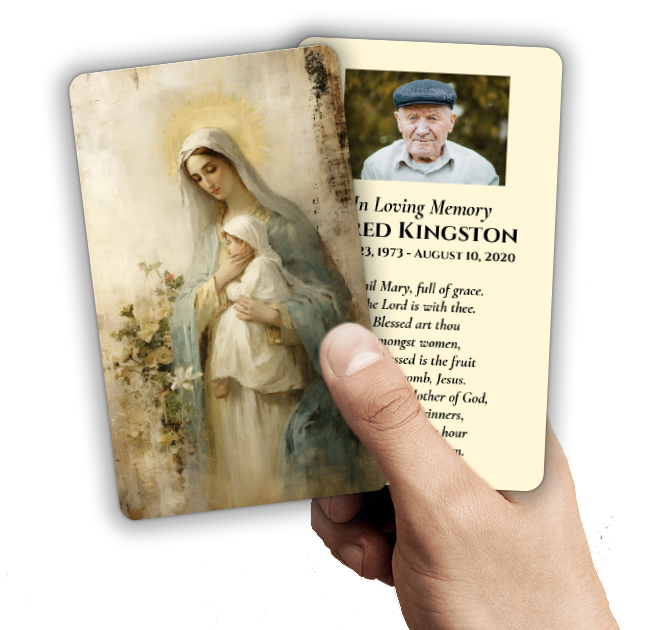 Saint Prayer Cards
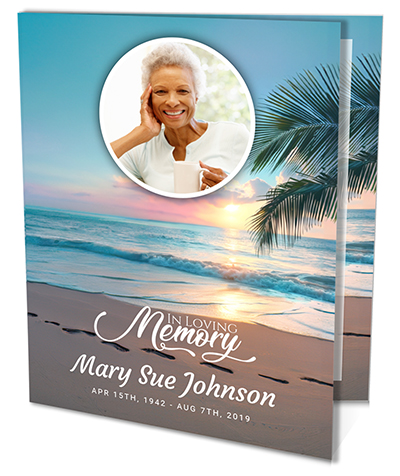 Folded Memorial Cards
 Folded Holy Cards
 Memorial Bookmarks
 Thank You Cards
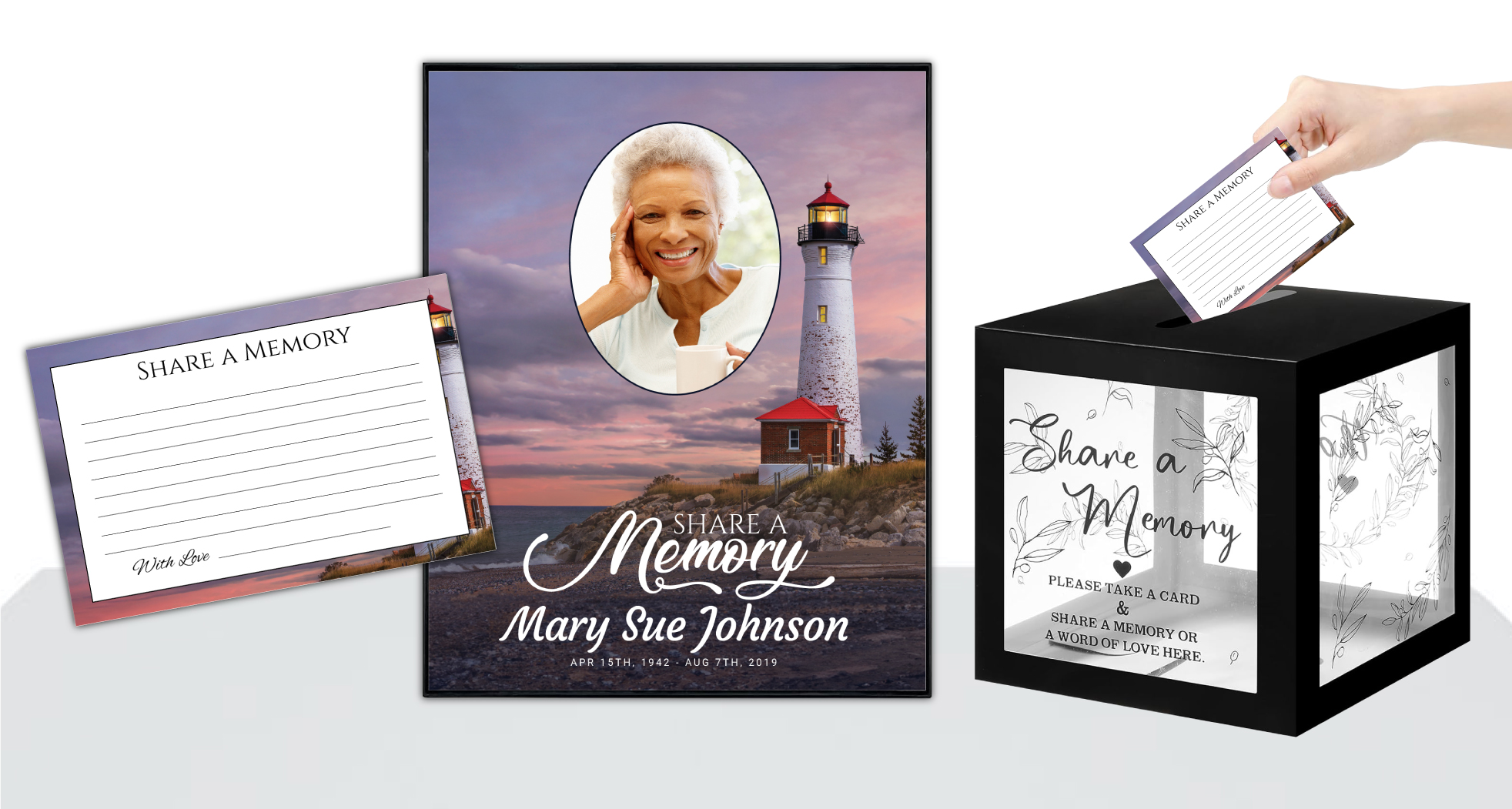 Share-A-Memory Cards
 Memorial Magnets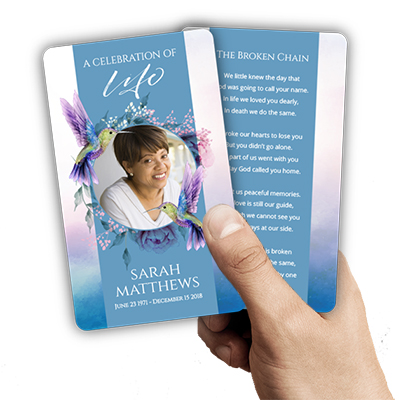
 Memorial Posters
 Guest Books
 Slide Shows
 Memorial Fans
 Death Announcements
 Take Away Keepsakes
 Church Products
Embracing Grief Together: The Importance of Collaborative Obituary Writing
When a loved one passes away, the weight of grief can feel overwhelming. During these tender moments, families and close friends often gather to honor the life and legacy of the person they’ve lost. Writing an obituary as a group can be both healing and daunting—it’s a way to celebrate memories together, but it can also bring up strong emotions and differing perspectives. If you’re reading this, you may be facing this very situation, searching for compassionate guidance on how to approach this delicate task as a team.
Writing an obituary as a group is about weaving together the diverse threads of shared memories, voices, and experiences. It’s a meaningful approach that ensures the tribute is rich, nuanced, and truly reflective of the person’s impact on many lives. However, the process can also bring logistical and emotional challenges—balancing everyone’s input, dividing responsibilities, and merging different writing styles, all while managing the urgency of funeral planning. It’s entirely normal to feel uncertain about where to start or how to proceed.
In this article, we’ll walk through every step of writing an obituary as a group or family team. We’ll discuss how to organize your efforts, communicate with care, and create a tribute that feels authentic to your loved one. You’ll find practical tips for dividing tasks, resolving differences, and ensuring the finished obituary fits beautifully into funeral programs, like the bi-fold and 8-page programs offered by DisciplePress. We’ll also share advice on using collaborative tools and highlight how our free Obituary Writing Assistant can support your process.
Our hope is to provide not just practical guidance, but also gentle reassurance. You are not alone in this journey. By coming together as a family or group, you honor both your loved one and each other—and the memory you create will offer comfort for years to come.
Gathering Your Group: Setting the Stage for a Collaborative Tribute

The first step in writing an obituary as a group is to thoughtfully assemble those who will participate. Consider who had a close relationship with the deceased—spouses, children, siblings, cousins, or lifelong friends often bring different, valuable perspectives. Sometimes, including a trusted friend outside the immediate family can lead to touching anecdotes and balance. If your family is large or geographically spread out, you might need to involve people virtually or designate representatives from each branch of the family.
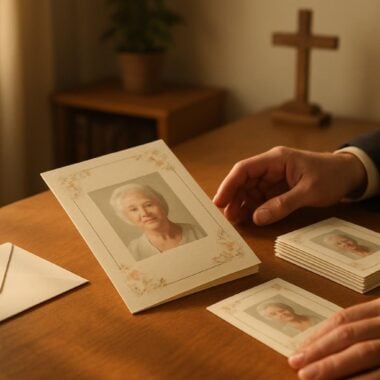
Every memorial should reflect the unique life and legacy of your loved one. We offer Memorial Bookmarks, Funeral Programs and Prayer Cards to help you create meaningful tributes.
Begin by reaching out to everyone you’d like to be involved. A phone call, group text, or email can be a gentle way to open the invitation. Explain why you value their input, and acknowledge that participation is voluntary—some may find the process too painful, while others might find comfort in contributing. Make it clear that every voice matters, and assure everyone that you’ll be sensitive to each person’s emotional state.
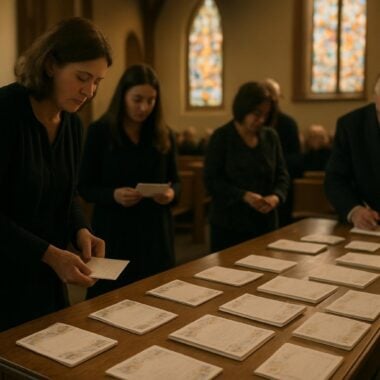
Once your group is formed, schedule a time to meet, whether in person or via video call. Choose a setting that’s comfortable and private, such as a living room or a quiet backyard. If meeting virtually, use a familiar platform and encourage everyone to find a peaceful space. Consider providing tissues, comforting snacks, and a gentle agenda to help ease the process.
Before you begin, acknowledge the emotional weight of the task. Opening the meeting with a brief memory or a favorite quote can help set a supportive tone. Remind everyone that disagreements are natural, and that your shared goal is to honor your loved one together. By fostering understanding and patience from the start, your group will be better prepared for the journey ahead.
Organizing the Process: Roles, Responsibilities, and Tools
With your group assembled, it’s time to organize the writing process. Assigning specific roles helps manage expectations and workload, ensuring everyone feels involved but not overwhelmed. Some may prefer to write, while others might want to share stories, review drafts, or handle practical tasks like gathering dates and photos. Consider roles such as:
- Lead Writer or Editor: Someone comfortable with writing can draft and compile sections.
- Memory Gatherers: Family members who share stories, facts, and favorite moments.
- Fact Checker: A detail-oriented person who ensures accuracy of names, dates, and places.
- Layout Coordinator: Someone who considers how the obituary will appear in the funeral program, such as an 8-page or 12-page booklet from DisciplePress.
Using collaborative tools can ease group coordination. Shared online documents (Google Docs, Microsoft Word Online) allow everyone to contribute and comment in real time, even if they’re far apart. For in-person meetings, a large notepad or whiteboard can help map out sections and ideas. If your group prefers, designate a point person to collect written input by phone or email, then merge everything into a single draft.
Gently check in with group members throughout the process. Some may need encouragement to participate, while others might have strong opinions about certain details. If disagreements arise, remind everyone of your shared purpose. If you’re unsure about specific traditions or wording, consider consulting our free Obituary Writing Assistant for helpful templates and phrasing suggestions.
Finally, keep the printing process in mind from the start. Note any word limits or formatting requirements if you plan to use bi-fold programs, 8-page programs, or more elaborate booklet programs. This foresight will help prevent last-minute edits and ensure your tribute fits beautifully into the chosen format.
Collecting and Weaving Memories: Building the Heart of the Obituary
The heart of every meaningful obituary is the collection of memories, anecdotes, and special moments that define a life. When writing obituary as a group, each participant brings unique memories—some poignant, some joyful, some quietly profound. Start your gathering by inviting everyone to share stories in their own words. Consider prompting with gentle questions, such as, “What’s one thing you’ll always remember about them?” or “Which moment made you laugh the hardest?”
Every memorial should reflect the unique life and legacy of your loved one. Our selection of Prayer Cards and Memorial Cards, along with our Custom Design Services, help families create meaningful tributes during difficult times.
As memories surface, take careful notes or record the conversation (with everyone’s consent) so nothing is lost. Look for recurring themes or stories—these are often the most telling and meaningful aspects to highlight. If your loved one was known for a particular kindness, hobby, or saying, those details can serve as the emotional anchor of the obituary.
Encourage group members to bring photos, letters, or mementos. A favorite recipe card, an old letter, or even a beloved book can spark memories that add warmth and authenticity to the tribute. When possible, ask each participant to write down a short anecdote or reflection. These can be woven into the main text or included as sidebars or quotes in more extensive booklet programs, like the 16-page or 20-page options from DisciplePress.
As memories are shared, be sensitive to raw emotions. Allow space for tears and laughter, and gently steer the conversation back to your shared goal if it drifts. Sometimes, families choose to include a favorite poem or Bible verse—if so, be mindful of copyright and consider using public-domain options or our curated Bible Verses Collection. Remember, the most touching obituaries are those that reflect the true spirit of the person being honored, told through the voices of those who loved them most.
Drafting the Obituary: Dividing Sections and Collaborating on Content
Once you have a wealth of memories and facts, the next step is to begin drafting the obituary. Many families find it helpful to divide the obituary into clear sections, assigning each part to a different group member based on their comfort and strengths. Typical sections might include:
- Introduction: A brief summary of the person’s life, character, and legacy.
- Early Life and Family: Birthplace, upbringing, siblings, and formative experiences.
- Major Life Events: Education, career, marriage, children, and significant achievements.
- Passions and Hobbies: Interests, community involvement, and personal joys.
- Closing: Survivors, memorial details, and a final tribute or quote.
Assigning sections allows everyone to contribute without feeling overwhelmed by the entire process. For example, an older sibling may write about childhood memories, while a grandchild shares stories from recent years. The lead writer or editor can then merge these pieces, smoothing transitions and ensuring a consistent tone.
As drafts are written, set deadlines to keep the process moving—especially if you need to meet the turnaround time for funeral programs. Share drafts with the group for feedback, inviting gentle suggestions and edits. Remind everyone that the obituary is a joint effort; compromise and empathy are key. If there are conflicting memories or perspectives, acknowledge them with care, choosing wording that honors everyone’s experience.
Keep in mind the length and format required for your chosen memorial product. A bi-fold program may need a concise version, while a 12-page or 16-page booklet can include extended stories, tributes, and photos. If you’re unsure about structure or length, the DisciplePress Obituary Writing Assistant can provide helpful templates tailored to your needs.
Reconciling Differences and Honoring Every Voice
When writing obituary as a group, it’s natural for differences to arise—whether about tone, specific memories, or which details to include. Grief can amplify emotions, making disagreements feel especially intense. The key is to approach every conflict with patience, compassion, and openness. Remind yourselves that your shared purpose is to honor your loved one’s memory, and that multiple perspectives enrich the final tribute.
If disagreements occur, pause to listen carefully to each person’s concerns. Sometimes, a compromise can be found by including both perspectives in the text, such as, “She was known for her quiet wisdom and her playful sense of humor, cherished by both family and friends.” If a story or detail is too painful or controversial, consider omitting it or discussing it privately outside the main group.
During group editing sessions, use gentle language when suggesting changes. Phrases like, “Would it be okay if we reworded this section to include…” or “Do you think we could add this memory here?” help maintain a spirit of collaboration. If a consensus can’t be reached, the lead writer may need to make the final decision, but should explain their reasoning with sensitivity.
To ensure every voice is honored, consider including short personal tributes or quotes from multiple family members. These can be set apart in sidebars or included as stand-alone paragraphs, especially in expanded funeral programs like 8-page or 12-page booklets. This approach enables each person to contribute directly, while still maintaining a cohesive main narrative.
Above all, remember that the obituary is a living document of love, not a historical record. It is perfectly acceptable to focus on what brings comfort and unity to your family, and to revisit the text as needed until everyone feels at peace with the result.
Finalizing the Obituary: Editing, Proofreading, and Preparing for Printing
With a complete draft in hand, your group can move on to the final editing and proofreading stage. This step ensures the obituary is accurate, polished, and ready for inclusion in your chosen memorial format. Begin by reviewing all names, dates, and locations carefully—these details are not only important for the record, but can be a source of comfort and pride for family members.
Next, read the obituary aloud as a group. Hearing the words spoken can reveal awkward phrasing or emotional resonance that may not be apparent on the page. Invite feedback from each participant, and make small adjustments as needed. Be sure to check for clarity, spelling, and grammar, but also for tone—your tribute should feel warm, sincere, and true to your loved one’s spirit.
Consider the layout and length required for printing. If you are using a DisciplePress 8-page or 12-page booklet program, or even a bi-fold or tri-fold program, check whether the obituary fits within the allotted space. You may need to create both a longer and shorter version: the detailed one for the booklet, and a concise version for funeral announcements or memorial cards.
Once you are satisfied with the final version, gather any accompanying materials—photos, poems, or Bible verses—and ensure they are high quality and appropriate for printing. If you need help with formatting or design, DisciplePress offers custom design services and same-day printing to help ease the final steps. Preparing everything in advance ensures a smooth process and allows you to focus on supporting each other during the service.
Before sending your materials for printing, do one last group review. This final check is not just about catching errors, but about affirming the love and care that went into your collaborative effort. Take a moment to appreciate the tribute you’ve created together—it is a testament to your loved one’s legacy and to the strength of your family or group.
Incorporating the Obituary into Funeral Programs and Keepsakes
Once your obituary is finalized, you’ll want to consider how best to incorporate it into the funeral or memorial service. Funeral programs are not only a practical guide for the service, but also a cherished keepsake for family and friends. DisciplePress offers a variety of formats—including bi-fold programs, tri-fold programs, and multi-page booklet programs (8, 12, 16, and 20 pages)—to suit every need and family tradition.
When choosing a format, think about how much content you’d like to include. A bi-fold program works well for a concise obituary and order of service, while an 8-page or 12-page booklet allows room for extended tributes, family photos, and even individual reflections from group members. For larger families or those wanting to share many memories, a 16-page or 20-page program can provide ample space for stories, poems, and special messages.
Don’t forget the many keepsake options available to help preserve your collaborative tribute. Prayer cards and memorial cards offer a brief version of the obituary alongside a favorite verse or photo, making them perfect for sharing with guests. Memorial bookmarks, memorial posters, and even custom Memorial T-Shirts can extend the reach of your loved one’s story, allowing each person to carry a piece of their memory home.
To ensure your obituary and program look their best, review print proofs carefully, checking layout, font size, and image quality. If you need assistance, DisciplePress’s custom design services can help tailor your materials to your family’s unique needs, while rush orders and same-day printing can accommodate even tight timelines. Remember, these keepsakes will be treasured for years—taking a little extra care with the details honors both your loved one and your collaborative effort.
Including your collaborative obituary across multiple keepsakes—booklet programs, bookmarks, and prayer cards—can also help extended family members and friends from afar feel connected, even if they cannot attend the service in person. Consider mailing copies or sharing a digital version as a lasting reminder of your loved one’s legacy and the strength of your family’s bond.
Using DisciplePress Tools and Resources for Collaborative Obituary Writing
At DisciplePress, we understand that writing obituary as a group can be both comforting and complicated. To support you, we offer a range of practical tools and resources designed to ease the process. Our free Obituary Writing Assistant is an invaluable starting point, offering structured templates and helpful prompts to guide your group through each section of the obituary. This tool can be used collaboratively, allowing each participant to contribute their thoughts and memories online before merging them into a final tribute.
When it comes to printing your obituary, our range of funeral program formats—including bi-fold, tri-fold, and multi-page booklet programs—allows you to choose the style and space that best fits your family’s needs. If you’re unsure which format to select, our Paper Types Guide and Design Gallery can help you visualize your options, while customer testimonials offer reassurance from other families who have walked this path before.
For families facing tight timelines or last-minute changes, DisciplePress offers rush orders and same-day printing, so you never have to worry about missing important deadlines. Our custom design services are available to help personalize your memorial materials, ensuring your group’s collaborative effort is beautifully presented and preserved.
Should you need further guidance or support, our team is always available—simply contact us with your questions or concerns. We’re here to help you every step of the way, from drafting and editing to printing and delivery, honoring your loved one’s memory with care and dignity.
Remember, you don’t have to navigate this journey alone. Our resources are designed to bring comfort, clarity, and connection, allowing your family’s collective voice to shine through in every memorial keepsake.
Related Articles
Conclusion: Honoring a Life, Together
Writing an obituary as a group or family team is a profound act of shared remembrance. By gathering together, you honor not only the life of your loved one but also the bonds that connect you. The process may bring moments of challenge, but it also offers deep healing and lasting comfort. Remember, there is no single right way to write an obituary—what matters most is the love and sincerity you bring to the task.
As you move forward, take comfort in the knowledge that your collaborative tribute will become a cherished keepsake for your family and friends. Whether you choose a simple bi-fold program or a comprehensive 20-page booklet from DisciplePress, your words will offer solace and connection for years to come. Don’t hesitate to use our free Obituary Writing Assistant or custom design services if you need extra support.
If you find yourselves struggling or unsure at any stage, reach out to the DisciplePress team or consult our extensive range of resources. Our goal is to make this process as gentle and affirming as possible, so you can focus on what truly matters—celebrating and remembering the life you shared.
No act of remembrance is too small. Every memory, every story, and every shared tear helps keep your loved one’s spirit alive. As you craft your group obituary, may you find moments of peace, unity, and hope. We are here for you, today and always, as you honor a life well-lived—together. Learn more about DisciplePress and our commitment to serving families. For personalized assistance, please contact us. We offer rush orders and same-day printing for urgent needs.