 Free Shipping Over $50
  888-432-8363


 Obituary/Programs
 No-Fold Memorial Programs
 4 Page Funeral Programs
 8 Page Memorial Programs
 12 Page Funeral Programs
 16 Page Funeral Programs
 20 Page Funeral Programs
 Tri-Fold Funeral Programs
 Complete Memorial Packages
 Cards & Bookmarks
 Saint Prayer Cards
 Folded Memorial Cards
 Folded Holy Cards
 Memorial Bookmarks
 Thank You Cards
 Share-A-Memory Cards
 Memorial Magnets
 Memorial Posters
 Guest Books
 Slide Shows
 Memorial Fans
 Death Announcements
 Take Away Keepsakes
 Church Products
Introduction: Finding Words of Gratitude During Loss
In the midst of saying goodbye to a loved one, families often face the tender task of expressing gratitude to those who have offered support and comfort. Whether it is a simple embrace, a meal left at the doorstep, or the tireless work of hospice staff, these acts of kindness are a vital source of strength. Yet, as we navigate grief, finding the right words to say “thank you” can feel overwhelming.
The acknowledgment section in a funeral program is a meaningful way to recognize the care and compassion extended by friends, neighbors, healthcare professionals, and faith communities. This small but significant note gives families the opportunity to honor the network that has surrounded them in their time of need. Knowing what to write—how much to say, whom to mention, and how formal to be—can be challenging, especially when emotions are raw.
In this guide, we’ll gently walk you through everything you need to know about crafting a heartfelt acknowledgment for your loved one’s funeral program. We’ll explore the differences between program acknowledgments and thank you cards, provide practical tips on wording, and share more than 15 real-life examples—religious and non-religious, long and short, and tailored for unique circumstances like thanking hospice staff or church families. Suggestions for integrating these into bi-fold programs, 8-page programs, and other formats will also be included.
Our hope is to make this process a little easier for you, offering both comfort and clarity as you prepare to honor your loved one. Whether you are working with a funeral director, planning a celebration of life, or creating a program at home, the guidance here will help you convey your family’s gratitude with warmth and sincerity.
The Role of Acknowledgments in Funeral Programs
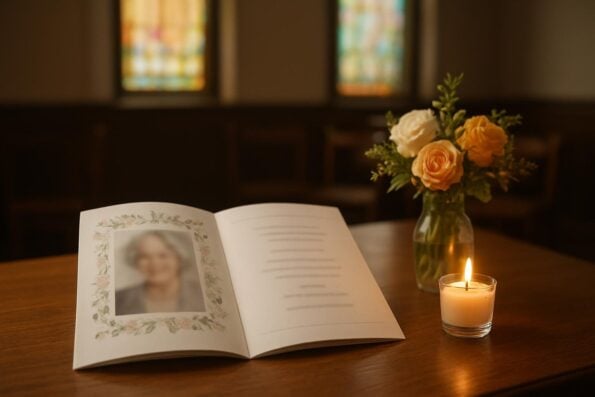
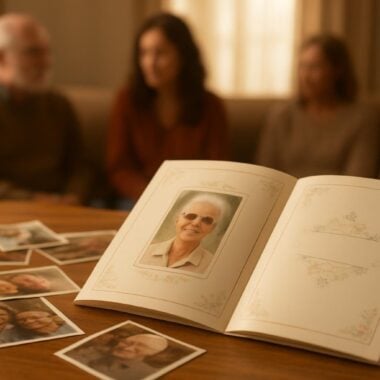
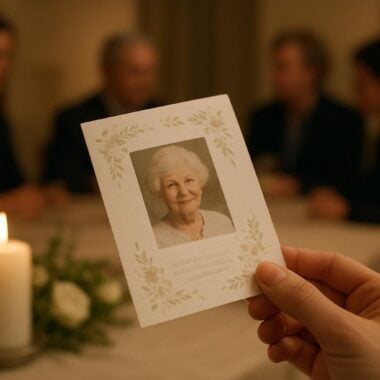
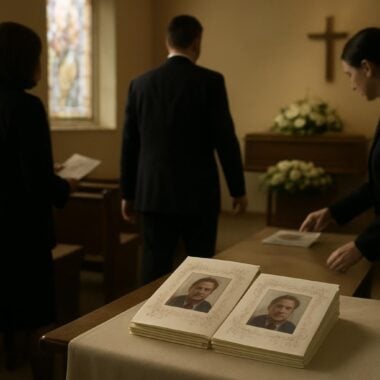
The acknowledgment section in a funeral program is a brief, heartfelt note, usually from the immediate family, expressing appreciation to those who have supported them before, during, and after the loss of a loved one. This message often appears near the end of the program, after the order of service or obituary, and serves as a final, communal moment of gratitude during the memorial gathering.
Unlike thank you cards, which are sent individually after the service to specific people, the program acknowledgment is a public message. It allows the family to thank everyone—friends, extended family, caregivers, clergy, and community members—who contributed in countless ways, even if each person cannot be thanked personally. It makes everyone present feel seen and valued, reinforcing the sense of shared community in mourning.
Including an acknowledgment in a funeral program—such as a bi-fold or booklet—can also provide comfort to the family. Writing the note encourages reflection on all the support received, reminding families that they are not alone in their grief. It also gives attendees a printed keepsake of your gratitude, something they can revisit in the days ahead.
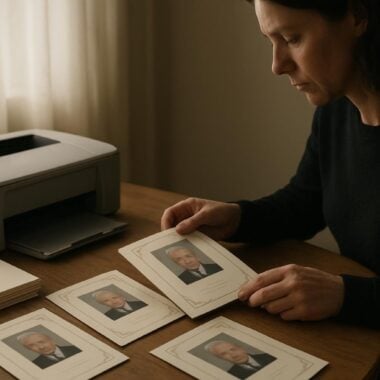
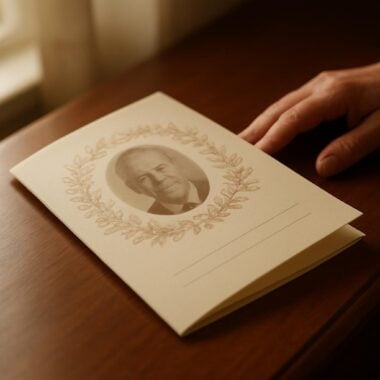
When preparing your program, consider your format. Options like 8-page programs and bi-fold programs offer ample space for a detailed acknowledgment, while tri-fold programs or celebration of life programs may require more concise wording. The team at DisciplePress is always available to guide you through choosing the right format for your family’s needs.
Ultimately, the acknowledgment is a small but powerful element—an opportunity to pause, breathe, and recognize the collective love that surrounds you. It is a gentle reminder that gratitude can coexist with sorrow, offering hope and healing to all who gather to remember.
How Program Acknowledgments Differ from Thank You Cards
It’s important to understand the distinction between the acknowledgment in a funeral program and the individual thank you cards sent after the service. Each serves a unique purpose in the grieving and gratitude process, and knowing the difference can help you plan appropriately and avoid feeling overwhelmed.
The program acknowledgment is a general statement of thanks, publicly expressing appreciation to everyone who has shown kindness, whether through attendance, flowers, meals, prayers, or messages of sympathy. This message is typically short and inclusive, meant for all who read the program, regardless of their specific role or contribution. It is a one-time gesture, shared during the funeral or memorial service itself.
In contrast, thank you cards are sent individually, usually within a few weeks after the service. These notes are more personal and specific, allowing you to mention the exact gift, act of service, or support someone provided. For example, you might thank a neighbor for preparing meals, a friend for organizing a prayer vigil, or a hospice nurse for their dedicated care. Because these cards are sent later, you have more time to reflect and personalize each message.
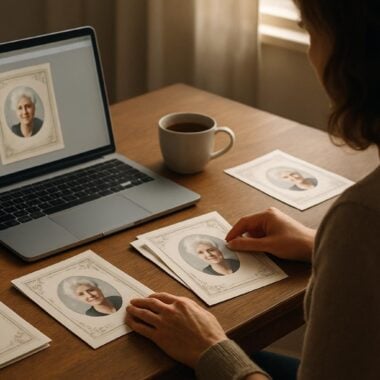
Families often worry about missing someone or not having the energy to write dozens of cards right away. Including an acknowledgment in your funeral program ensures that everyone is thanked, even if you cannot reach them individually. Then, as you are able, you can use printed thank you cards from DisciplePress to follow up with those who went above and beyond.
For those short on time or feeling emotionally exhausted, our ready-made thank you cards and custom design services can help make this process easier. Remember, expressing gratitude does not need to be perfect or exhaustive—what matters most is the sincerity and love behind your words.
Choosing the Right Words: Tips for Writing a Meaningful Acknowledgment
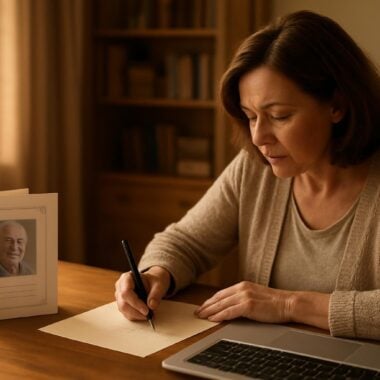
Writing an acknowledgment can feel daunting, especially when emotions are high and words seem inadequate. Yet, a few simple guidelines can help you craft a message that is both heartfelt and appropriate for your family’s beliefs, traditions, and the tone of the service.
First, consider the overall style of your program. For more traditional services, formal language may be fitting, while celebrations of life or casual gatherings may call for a warmer, conversational tone. Personalize your message by mentioning your loved one’s name, and if you feel comfortable, include a brief reference to the type of support you’ve received—meals, flowers, prayers, or simply presence.
If your family is religious, you might include a brief prayer, reference to faith, or a favorite Bible verse. Our Bible Verses Collection can provide inspiration. For non-religious families, a simple expression of gratitude and acknowledgment of kindness is equally meaningful, focusing on the human connection rather than spiritual themes.
Be inclusive in your thanks. Acknowledge not just those present, but also those who supported you from afar—through phone calls, cards, or online messages. If particular individuals or groups played a significant role, such as hospice staff, clergy, or a church family, mention them specifically, but balance this with a general thank you to all.
Lastly, keep it genuine. There is no need for elaborate prose or poetic language unless it feels natural to you. A few sincere sentences, written from the heart, will always resonate more deeply than a lengthy or overly formal note. If you need inspiration, the following section offers a variety of examples to guide you.
15+ Acknowledgment Examples: Religious, Non-Religious, Short, and Long Versions
Every family’s journey through loss is unique, and so are the words that best express their gratitude. Here are over 15 acknowledgment examples, designed for a range of beliefs, personalities, and circumstances. Feel free to adapt any of these to suit your loved one’s memory and your family’s voice.
Short Religious Acknowledgments
- “We are deeply grateful for your prayers, love, and support during this difficult time. May God bless each of you.”
- “The family of [Name] thanks you for your kindness, prayers, and presence. Your faith and friendship sustain us.”
- “Thank you for your comforting words, prayers, and thoughtfulness. We appreciate your support more than words can express.”
Short Non-Religious Acknowledgments
- “Thank you for your kindness and support during our time of loss. Your caring means so much to us.”
- “We are grateful for the love, friendship, and comfort you have given our family.”
- “Your presence, words, and gestures of sympathy have brought us comfort. Thank you.”
Longer Religious Acknowledgments
- “The family of [Name] wishes to thank everyone for their prayers, visits, and acts of kindness during our time of sorrow. We are especially grateful to our church family and the clergy for their spiritual guidance and support. May God’s peace be with you all.”
- “We are blessed by the outpouring of love, prayers, and support from our friends, family, and community. Special thanks to the hospice staff for their compassionate care, and to our church for providing comfort and guidance. May the Lord watch over you as you have watched over us.”
Longer Non-Religious Acknowledgments
- “With heartfelt appreciation, we thank all who have supported us during this difficult journey. From meals and visits to messages and memories shared, your kindness has been a source of strength. We extend special gratitude to the caregivers at [hospice/facility name] for their dedication and compassion.”
- “Our family is deeply touched by the generosity, friendship, and support shown by so many. Whether you attended in person, sent a card, or reached out from afar, your kindness will always be remembered. Thank you for honoring [Name]’s memory with us.”
Specific Group Acknowledgments
- “We extend our heartfelt thanks to the hospice staff, whose gentle care and compassion brought comfort to [Name] and our family.”
- “Special thanks to our church family for your prayers, meals, and unwavering support.”
- “We are grateful to the friends and neighbors who shared your time, stories, and love during our loss.”
Remember, you can combine several of these elements or tailor them to fit the space available in your chosen program format. If you’re creating an 8-page program or booklet, you may have room for a longer, more detailed message; for a bi-fold program, a shorter acknowledgment may be best.
For those needing more inspiration, our Funeral Poems Collection and Memorial Quotes can also offer comforting words to include alongside your acknowledgment.
Acknowledging Hospice Staff, Church Families, and Special Helpers
Some losses are accompanied by extraordinary acts of service, such as the tireless care of hospice staff, the steadfast presence of a church family, or the help of dear friends who coordinated meals, transportation, or the service itself. These contributions often deserve special mention in your program acknowledgment, both to honor their impact and to let others know how much their efforts meant to your family.
When mentioning hospice staff, be specific if possible: “Our deepest gratitude to the nurses and aides at [facility name] for your compassion and dedication.” For church families, you might write: “Thank you to our church family, who prayed with us, brought meals, and surrounded us with love.” If a group of friends or neighbors took on a particular responsibility—such as organizing a meal train or handling logistics—consider acknowledging their unique support: “We are especially grateful to [Name] and friends for your help with arrangements and your constant kindness.”
Including these specific acknowledgments not only provides comfort to those who served, but also models gratitude for all attendees. It reminds everyone that, even in sorrow, community and connection are lifelines. If you are using a funeral guest book, you may also wish to leave a note of thanks for guests to see as they sign in.
For large or blended families, or when multiple groups have played vital roles, it’s helpful to group acknowledgments: “We thank the staff of [facility], our church family, and all who have shown us love during this time.” This balances inclusivity with personalization, ensuring that no one feels left out while still shining a light on those who went above and beyond.
If you’re not sure whom to mention, reflect as a family and make a short list before you begin writing. Remember, the team at DisciplePress can assist with custom design services to help format your acknowledgment beautifully—no matter how many people or groups you’d like to thank.
Formatting and Placing Your Acknowledgment in the Program
Where and how you place your acknowledgment in the funeral program can affect its impact. Typically, the acknowledgment appears on the last page or the inside back cover of a bi-fold program, or within the closing pages of an 8-page or booklet program. For tri-fold or celebration of life programs, it may appear beneath the order of service or obituary, depending on available space.
When formatting, clarity and readability are key. Use a font and size that are easy to read, and leave enough white space so the acknowledgment doesn’t feel crowded. If you’re including specific names or groups, consider using bullet points or line breaks for emphasis. Our team at DisciplePress can assist with layout suggestions to make sure your message is seen and appreciated.
If your program includes a photo collage, memorial bookmarks, or other keepsakes, you might wish to carry the theme or color scheme into your acknowledgment section for a cohesive look. For families including a favorite Bible verse, poem, or memorial quote, placing it near the acknowledgment can add depth and comfort.
For those working under time constraints, our same-day printing and rush order services can help ensure your program is ready when you need it. Whether you choose a simple bi-fold, a detailed 8-page, or a custom booklet, we can help ensure your acknowledgment is both beautifully presented and easy to find.
Remember, there is no strict rule about placement or length—what matters most is that your gratitude is expressed in a way that feels right for your family and honors the memory of your loved one.
Practical Tips: Making Your Acknowledgment Personal and Inclusive
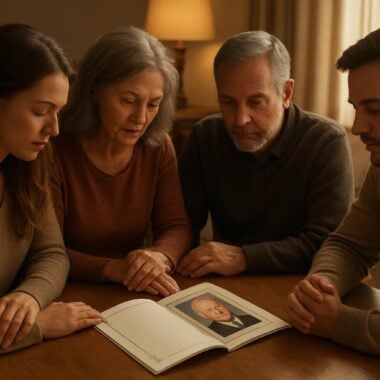
Personalizing your acknowledgment helps it resonate with both your family and those you’re thanking. Begin by gathering input from immediate family members, who may remember acts of kindness you’ve overlooked. Sharing this responsibility can also lighten the emotional load and create a sense of togetherness as you write.
As you draft your message, strive for balance between specificity and inclusivity. While it’s important to mention key groups or individuals, avoid lengthy lists that may unintentionally leave someone out. Phrases like “and all who have supported us” ensure that everyone feels remembered, even if not mentioned by name.
Consider integrating a meaningful phrase, quote, or even a favorite saying of your loved one. For example: “As [Name] always said, ‘Kindness is the greatest gift’—thank you for sharing yours with us.” This personal touch can bring comfort and a sense of continuity, especially for younger family members or close friends.
When time is short, or if you’re unsure how to word your message, using a pre-written template from DisciplePress or working with our custom design services can be a great help. Our team can suggest wording, format, and even font choices based on your program style, whether it’s a bi-fold, 8-page, or booklet program.
Finally, don’t hesitate to ask for feedback from others involved in the planning process. A fresh perspective can help ensure your acknowledgment is as warm, inclusive, and representative of your family’s gratitude as possible.
Beyond the Program: Continuing Gratitude After the Service
The gratitude you express in your funeral program is just the beginning. In the weeks following the service, you may wish to send individual thank you cards to those whose support was especially meaningful—clergy, caregivers, close friends, or anyone who went out of their way to honor your loved one’s memory.
DisciplePress offers a range of thank you card designs, including religious and non-religious styles, and our custom design services can help you personalize your message. Consider referencing the acknowledgment from your program, and add a personal note about the specific act of kindness you’re thanking the person for.
For those who brought flowers, made memorial donations, or helped with the service, a short note—“Thank you for your thoughtfulness and generosity”—can mean a great deal. If your family received support from a hospice or medical staff, a special card of appreciation can brighten their day and acknowledge the vital role they played in your loved one’s final days.
Remember, there is no deadline for expressing gratitude. Take your time, and allow yourself grace if you are not able to write every card right away. Even a brief message, sent weeks or months later, will be appreciated and remembered.
If you need inspiration or assistance, the thank you cards on our site are designed to make this important gesture as easy and meaningful as possible.
Related Articles
Conclusion: Honoring Support with Sincere Words
Writing a funeral program acknowledgment is more than a formality—it is a way to honor the love, care, and support that lightened your burden during a time of profound loss. By thoughtfully expressing your gratitude, you help foster a sense of connection and community, both for your family and for all who mourn with you.
Whether your message is formal or informal, religious or secular, brief or detailed, what matters most is the sincerity behind your words. Using the examples and tips provided here, you can craft an acknowledgment that feels true to your family, fits your chosen program format, and honors the memory of your loved one.
Remember, DisciplePress is here to support you every step of the way. Our bi-fold programs, 8-page programs, thank you cards, and funeral guest books are designed with care to help families express their gratitude and preserve cherished memories. If you need guidance with wording, formatting, or design, please contact us—we are honored to help.
As you move through the journey of grief, may the support of those around you bring comfort and hope. Your words of thanks, however simple, will be a lasting tribute to the kindness that surrounds us all in times of need. Read what other families have said in our customer testimonials. Visit our FAQ page for answers to common questions.